Hepatoprotective effect of morin via regulating the oxidative stress and carbohydrate metabolism in STZ induced diabetic rats
DOI :
https://doi.org/10.31989/bchd.v5i3.893Résumé
Background: Diabetes mellitus is widely recognized as one of the leading causes of death and disability worldwide. Hyperglycaemia-mediated oxidative stress plays a significant role in the development and progression of diabetes - induced liver damage.
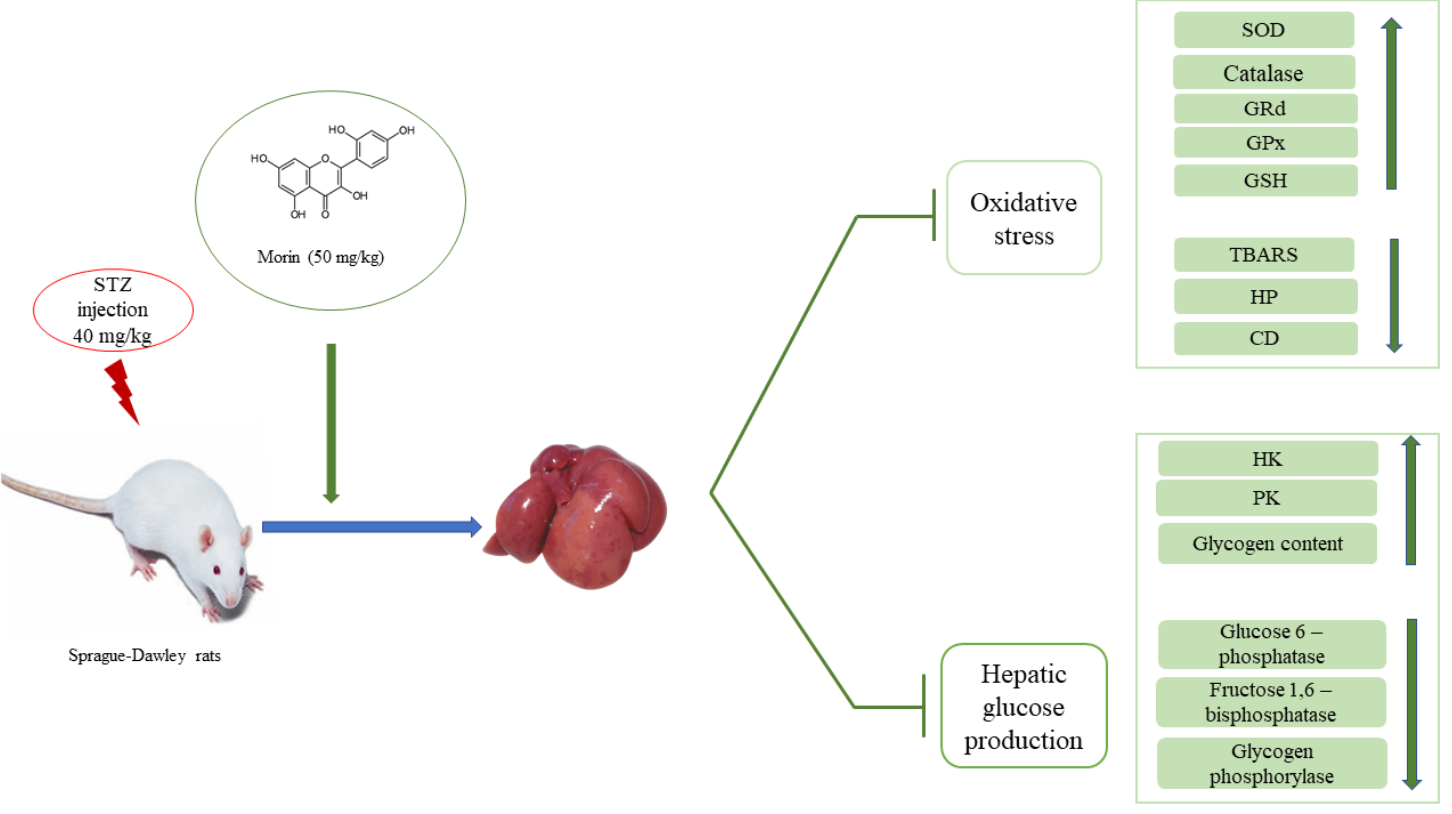
Objective: The main aim of the study was to explore the modulatory effect of the flavonoid morin (3,5,7,2’,4’ -pentahydroxyflavone) on oxidative stress and carbohydrate metabolism in the liver of streptozotocin (STZ) induced diabetic rats.
Methods: Diabetes was induced in male albino rats by intraperitoneal injection of streptozotocin (40 mg/kg body weight) and subsequently, the animals were given morin intragastrically at a dose of 50 mg/kg body weight for 60 consecutive days. At the end of the treatment period, the animals were sacrificed by an intraperitoneal injection of thiopentone sodium. Blood and liver tissue were collected for further biochemical evaluation and the effects were compared with diabetic rats administered metformin, a standard antidiabetic drug.
Results: Elevated blood glucose and HbA1c levels in diabetic rats were significantly decreased by morin administration. Morin effectively modulated the alternations in the concentration of lipid peroxidation products, activities of antioxidant enzymes and carbohydrate metabolizing enzymes in the liver of diabetic rats. The overall effects were comparable with diabetic rats administered with metformin.
Conclusion: The results of our study proved that the morin administration exerts hepatoprotective activity by decreasing oxidative stress and regulating the altered activities of carbohydrate metabolizing enzymes in diabetes.
Keywords: diabetes, morin, liver, oxidative stress, carbohydrate metabolism
Téléchargements
Publié
Numéro
Rubrique
Licence
© FFC/Bioactive Compounds in Health and Disease 2022

Cette œuvre est sous licence Creative Commons Attribution - Pas d'Utilisation Commerciale 4.0 International.
Authors retain the copyright of their articles and grant the Functional Food Center (FFC) and its journals the right of first publication under the terms of the Creative Commons Attribution 4.0 International License.
This license permits unrestricted use, distribution, and reproduction in any medium, including commercial use, provided the original author(s) and source are properly credited. Authors may post and share their published work freely, provided that the original publication in this journal is acknowledged.
By submitting to this journal, authors confirm that their manuscripts are original, not under consideration elsewhere, and that they hold the necessary rights to grant this license. The Functional Food Center encourages open scientific exchange and allows derivative and extended works, provided attribution to the original publication is maintained.