Effect of oral administration and topical gel application of thymol and low-level laser therapy on oxidative stress, inflammatory biomarkers and dermatitis in patients with type 2 diabetes mellitus
DOI:
https://doi.org/10.31989/bchd.v5i4.910Rezumat
Background:Unmanaged diabetes mellitus, as a chronic metabolic disease, has dangerous consequences. The consequences of diabetes can be delayed and controlled by using antioxidants and anti-inflammatory substances in the food compounds.
Objective: One of the main objectives of this study was to evaluate thymol administration and low-level laser therapy on the change of inflammatory and, oxidative indicators, and lipid profiles in patients with type 2 diabetes. Another aim was to study the effect of thymol oil extract on dermatitis.
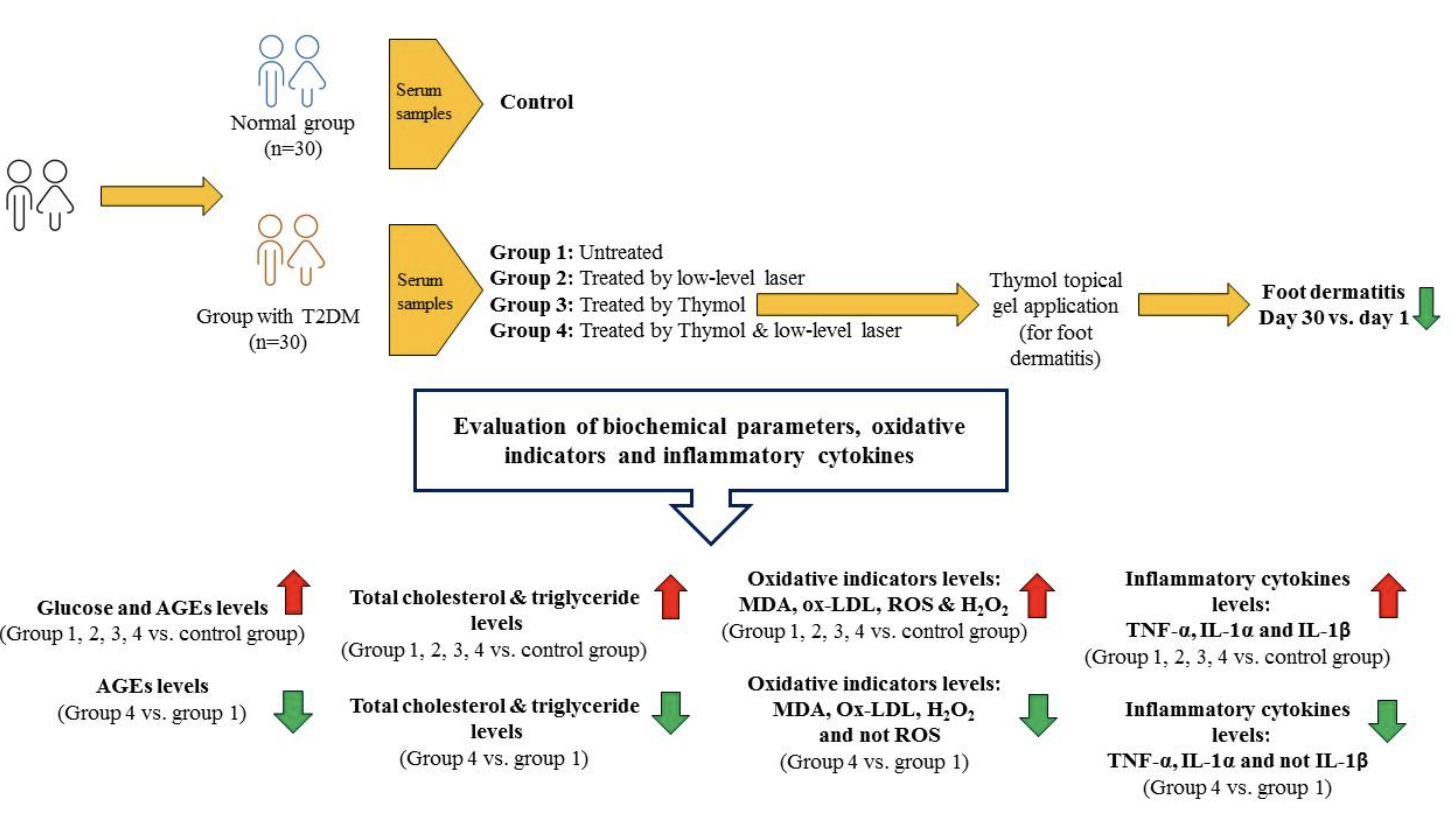
Methods:Thirty volunteers with type 2 diabetes and thirty healthy volunteers as controls were selected. Blood samples were taken from all subjects before the study. The diabetic group was divided into four groups: untreated, treated with low-level laser, treated with thymol (25 mg/kg/30 days) and treated with thymol and laser. Glucose, advanced glycation end products, malondialdehyde, oxidized low level laser, reactive oxygen species, peroxide hydrogen, total cholesterol, triglyceride, and inflammatory cytokines such as tumor necrosis factor alpha, interleukin-1 beta and interleukin-1 alpha were measured and compared between diabetic and control groups and within diabetic groups. Thymol gel oil extract (0.5%) was studied in reduction of dermatitis in the feet of the diabetic group.
Results:Thymol administration, along with low-level laser therapy, reduced levels of cytokines except for interleukin-1 alpha, total cholesterol, triglycerides, advanced glycation end products, hydrogen peroxide, malondialdehyde, and oxidized low density level lipoprotein (P value < 0.05). The effect of 0.5% thymol oil as a gel on the reduction of dermatitis was not significant.
Conclusion:Thymol administration and thymol gel as well as low-level laser therapy, as adjunctive methods, through the reduction of free radicals and oxidative stress can be useful in controlling and reducing the diabetes complications.
Keywords: Diabetes mellitus, Thymol, Topical gel, Low-level laser therapy, Dermatitis
Descărcări
Publicat
Număr
Secțiune
Licență
Copyright (c) 2022 FFC/Bioactive Compounds in Health and Disease

Această lucrare este licențiată în temeiul Creative Commons Attribution-NonCommercial 4.0 International License.
Authors retain the copyright of their articles and grant the Functional Food Center (FFC) and its journals the right of first publication under the terms of the Creative Commons Attribution 4.0 International License.
This license permits unrestricted use, distribution, and reproduction in any medium, including commercial use, provided the original author(s) and source are properly credited. Authors may post and share their published work freely, provided that the original publication in this journal is acknowledged.
By submitting to this journal, authors confirm that their manuscripts are original, not under consideration elsewhere, and that they hold the necessary rights to grant this license. The Functional Food Center encourages open scientific exchange and allows derivative and extended works, provided attribution to the original publication is maintained.